
A curated collection of accessories has the unique power to transform an ordinary outfit into an intentional, polished statement. From heirloom jewelry pieces and designer sunglasses to leather belts, silk scarves, and everyday handbags, accessories add personal character to your wardrobe. Yet, despite their aesthetic importance, these items are frequently the most poorly managed possessions in the home.
Without an intentional storage system, accessories quickly descend into a frustrating, tangled mess. Delicate chains knot together inside dark drawers, fine leather handbags lose their structural shape at the bottom of a closet, sunglasses suffer micro-scratches on dresser tops, and earrings turn up missing their matching pairs. This persistent clutter does more than waste time during busy mornings; it leads directly to irreversible damage to valuable investments.
Developing a practical, sustainable accessory organization method does not require vast walk-in closets or costly custom cabinetry. It requires understanding material care, applying vertical space efficiently, maintaining daily visibility, and building storage habits tailored to your lifestyle.
The Core Rule: You Cannot Wear What You Cannot See
The most common failure in accessory storage is out-of-sight concealment. When rings, bracelets, and sunglasses are tucked away into deep boxes, solid bins, or chaotic drawers, they effectively cease to exist in your daily styling rotation. Human behavior favors convenience. If accessing an item requires sifting through stacked boxes or untangling cords, you will default to wearing the same three pieces resting on top of your vanity.
An effective organization system balances preservation with visual accessibility:
-
Open-display balance: Keep your most frequently worn essentials visible and within arm reach, using shallow trays or tabletop stands.
-
Transparent containment: For archival or delicate pieces kept in closets or cabinets, utilize clear acrylic containers or labeled organizers so contents remain identifiable at a glance.
-
Elimination of dead zones: Prevent items from accumulating in deep closet corners or under hanging garments by introducing focused accessory shelving or hanging racks.
Establishing immediate visual awareness ensures that your entire collection remains in active use, maximizing the return on every piece you own.
Conducting a Comprehensive Inventory and Purge
Before purchasing drawer dividers, velvet trays, or hooks, you must conduct a thorough inventory of your current holdings. Attempting to organize a collection cluttered with broken, outdated, or unloved items simply rearranges chaos.
Gather every accessory from your drawers, purse pockets, coat closets, and nightstands into one well-lit area. Group them strictly by category: fine jewelry, costume jewelry, everyday eyewear, seasonal scarves, belts, hats, and handbags.
Evaluate each item through an objective lens:
-
Assess physical condition: Separate broken pieces, watches requiring battery replacements, tarnished metals, scuffed leather, and sunglasses with loose hinges. Determine what can realistically be repaired and discard items damaged beyond repair.
-
Identify duplicates and redundancies: If you own four nearly identical black belts or five pairs of standard aviator sunglasses, select your favorites and donate the rest.
-
Evaluate emotional and functional value: Set aside pieces that cause physical discomfort, such as heavy earrings that pull on earlobes or hats that fit too tightly.
-
Create a preservation tier: Separate high-value fine jewelry and luxury heirlooms from costume jewelry. These two categories have fundamentally different environmental and security requirements.
Pruning your collection leaves you with pieces you genuinely love, significantly reducing the volume of items requiring storage solutions.
Fine and Costume Jewelry Storage Solutions
Jewelry contains delicate metals, soft gemstones, and intricate mechanisms that deteriorate rapidly if stored carelessly. Different materials react uniquely to oxygen, ambient humidity, and physical friction.
Protecting Fine Metals and Gemstones
Gold, platinum, and genuine gemstones should be preserved in soft, anti-tarnish environments to avoid surface abrasions and chemical degradation.
-
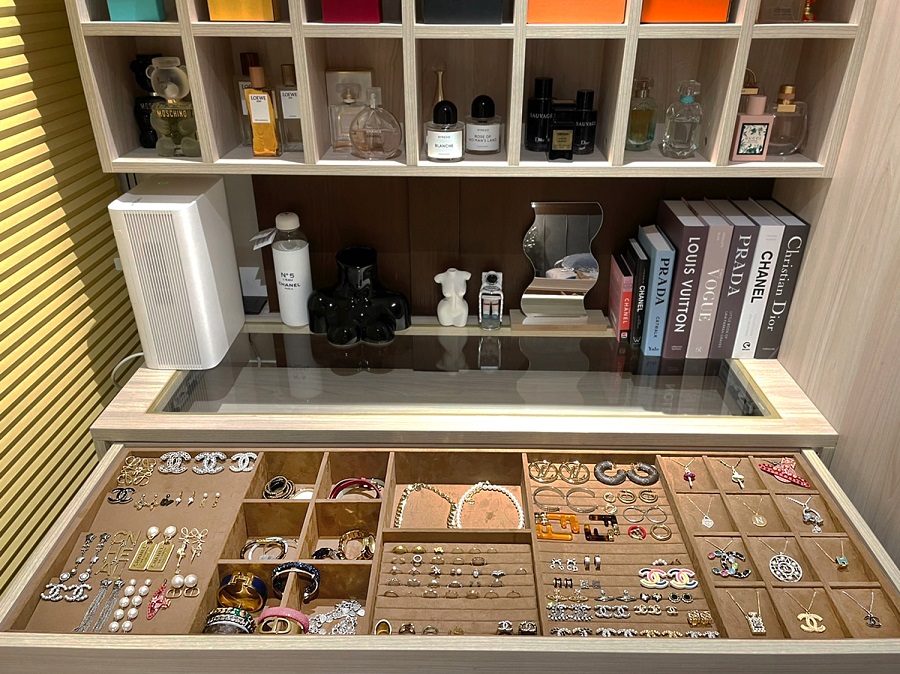
Felt and velvet-lined compartments: Store individual rings and stud earrings in slotted foam or velvet trays. Direct contact between hard stones, particularly diamonds, can scratch softer metals and gems.
-
Anti-tarnish cloth and closed boxes: Sterling silver reacts with airborne sulfur compounds to create tarnish. Store fine silver inside airtight jewelry cases lined with treated anti-tarnish fabric, or tuck anti-corrosion strips inside storage drawers.
-
Moisture control: Place food-safe silica gel packets inside closed jewelry boxes, particularly in regions with high humidity. Excess moisture accelerates metal degradation and ruins organic gems like pearls and opals.
Eliminating Tangles in Necklaces and Chains
The frustration of working out a tight knot in a delicate gold chain is entirely preventable through proper vertical or linear suspension.
-
Wall-mounted jewelry hooks: Install low-profile wooden or brass hooks inside closet doors or behind full-length mirrors to hang necklaces individually. Gravity keeps chains straight and separates clasps.
-
Acrylic necklace towers: For tabletop surfaces, choose clear acrylic t-bars or rotating carousels that provide 360-degree visibility while keeping pendants from colliding.
-
Linear drawer channels: If drawer storage is necessary, select organizer trays with long, narrow channels. Lay each necklace straight with the clasp fastened to prevent movement when opening the drawer.
Handbag Preservation: Retaining Shape and Extending Lifespan
Handbags are major financial investments that suffer permanent creasing, dye transfer, and structural collapse when shoved onto crowded closet shelves or hung from door hooks for months at a time.
-
Internal stuffing: High-grade leather and suede require internal support to maintain their form. Stuff empty handbags with acid-free tissue paper, dedicated purse-pillows, or bubble wrap. Avoid using printed newspaper, as chemical inks transfer onto internal fabric linings over time.
-
Upright acrylic shelf dividers: Acrylic vertical dividers keep bags standing upright side by side on closet shelves without leaning against one another. This setup prevents dye transfer between dark and light leathers while displaying your collection like a luxury boutique.
-
Dust covers for delicate leathers: Luxury calfskin, lambskin, and patent leather should be stored inside breathable cotton dust bags. Avoid storing leather in non-breathable plastic bins, which trap ambient humidity and foster mold development.
-
Avoid prolonged strap hanging: Storing loaded or heavy handbags on narrow hooks stretches and cracks leather shoulder straps, damages edge paint, and weakens structural stitching over time.
Organizing Belts, Scarves, and Eyewear
Smaller textile and leather accessories require dedicated zones to prevent them from taking over multi-use dresser drawers.
Belts
Tossing belts loosely into a bin ruins leather finishes and causes permanent curling.
-
The coiled drawer method: Roll belts loosely, beginning at the buckle and moving outward. Place them coiled upright into square drawer organizer grids. This keeps buckles visible while preventing deep creases.
-
Hanging belt organizers: If closet rod space allows, use a rotating belt ring or slide-out accessory rack to hang belts by their buckles, allowing the leather to hang straight naturally.
Scarves and Wraps
Scarves range from thin silk squares to heavy wool winter blankets, requiring tailored storage methods.
-
Silk and lightweight fabrics: Fold delicate silk scarves along existing fold lines and store them in shallow drawer dividers or transparent pull-out boxes. Avoid hanging lightweight silk on rough metal hangers that cause snags.
-
Knit and winter scarves: Roll bulkier knit wraps into compact cylinders and place them in fabric-lined closet baskets. Rolling prevents hard fold lines and saves substantial shelf space.
Eyewear
Sunglasses and reading glasses get scratched when dropped onto entryway counters or left inside coat pockets.
-
Multi-slot eyewear cases: Use fabric-lined stackable cases with six to eight compartments to keep your eyewear collection unified and dust-free.
-
Acrylic wall displays: Mount clear acrylic glasses racks inside a dressing room or near your entryway mirror to view frames side by side before heading out.
Maintaining the System Through Daily Routines
The most sophisticated storage architecture will fail if returning items to their designated places requires complicated steps. Long-term organization depends on reducing friction during end-of-day routines.
-
Establish a daily landing station: Keep a small ceramic tray or leather valet bowl on your nightstand or dresser. Drop your daily watch, earrings, and rings there at bedtime if you are too tired to return them to their formal spots.
-
The morning return habit: Clear the landing tray each morning as you select your accessories for the new day. This single two-minute routine keeps items from piling up on flat surfaces.
-
Seasonal rotations: Twice a year, adjust your storage layout. Bring summer hats, woven beach bags, and light scarves to eye level during spring, while rotating heavy wool beanies, leather gloves, and dark winter accessories into higher closet shelves.
Organizing your accessories transforms how you interact with your personal style. By protecting delicate materials, maximizing visibility, and using practical storage systems, you eliminate daily styling stress, preserve the lifespan of your possessions, and rediscover the joy of wearing your complete collection.
Frequently Asked Questions
How can costume jewelry be prevented from turning green or tarnishing?
Costume jewelry turns green when base metals like copper and brass react with moisture, air, and skin oils. To slow this oxidation, keep pieces dry and apply clear microcrystalline jewelry wax or a thin coat of specialty jewelry barrier sealant to metal contact points. Store costume jewelry in airtight zip-top plastic bags away from humid bathrooms, and never put on jewelry until your lotions, body oils, and perfumes have dried.
Is it safe to store delicate jewelry inside a bathroom cabinet?
No, the bathroom is the worst room in the house for jewelry storage. Hot showers create continuous cycles of high heat and steam, accelerating oxidation across silver, base metals, and plated finishes. Moisture also damages the structural glue used in costume pieces and ruins organic gemstones like pearls. Keep all jewelry in a dry, temperature-controlled environment such as a bedroom, closet, or dressing room.
How should vintage hats and structured brimmed hats be stored to maintain their form?
Structured hats should never be stacked flat on top of each other, as the weight crushes crown shapes and distorts brims. Store them individually inside dedicated, round, acid-free hat boxes with the crowns supported by tissue paper. Alternatively, mount wooden pegs or wide, rounded hat hooks on a bedroom wall to display them as decorative art while keeping their shapes intact.
What is the best way to clean and prepare accessories before storing them away for the season?
Always clean accessories thoroughly before seasonal storage to eliminate sweat, body oils, cosmetic traces, and road dust that attract pests and cause fabric staining. Wipe down metal and acetate sunglasses with a microfiber cloth and lens cleaner. Condition leather handbags and belts with a quality leather cream. Hand-wash or dry-clean scarves, ensuring textiles are dry before storing them in breathable fabric bags with natural cedar blocks.
How can fine pearls be stored safely without causing surface abrasions or drying out?
Pearls require specialized care because they are organic gems with soft, porous surfaces. Never store pearls in plastic bags or airtight containers, as the absence of humidity causes them to dehydrate and crack. Store pearls flat in a silk pouch, velvet-lined box, or suede jewelry folder. Avoid hanging pearl necklaces on hooks, as the weight of the gems will permanently stretch the internal silk cord over time.
How do you prevent leather belts from developing mold when stored in a walk-in closet?
Mold develops on leather when closets experience poor air circulation and elevated humidity. Keep leather belts off damp closet floors and away from exterior-facing walls. Ensure closets have adequate ventilation by leaving doors open periodically, using a dedicated room dehumidifier, or placing moisture-absorbing silica canisters on closet shelves. If mold appears, clean the leather with a dilute vinegar solution, let it dry in indirect sunlight, and condition it with an antifungal leather cream.
What should you do with odd earrings that have lost their matching pairs?
Sort through your unmatched earrings and verify whether the missing pairs are truly gone or simply scattered in coats and purses. If a mate cannot be found, you do not need to discard the piece. Single stud earrings can be worn in secondary ear piercings, converted into decorative lapel pins, or gathered into a small craft container. Many jewelers can convert sentimental single earrings into custom pendants, charms, or rings.